

How to Pray Istikhara — A Step-by-Step Guide
Istikhara Dua and the Right Way to Seek Allah’s Guidance
What Is Istikhara?
Istikhara means “seeking what is best from Allah.” When you face a decision — a marriage proposal, a job offer, a move, a business deal — you pray two rak’at of nafl prayer and then make a special du’a, asking Allah to guide you toward what is good for your deen, your life, and your Hereafter.
The Prophet ﷺ taught istikhara to his Companions the way he taught them the Qur’an. Jabir ibn Abdullah (RA) narrated: “The Messenger of Allah ﷺ used to teach us istikhara in all matters, just as he taught us a surah of the Qur’an.” (Sahih al-Bukhari 1162)
Istikhara is not fortune-telling. It does not tell you the future, and it does not replace research, thinking, or asking trustworthy people for advice. It is a way of placing your decision in Allah’s hands after you have done your part.
When Should You Pray Istikhara?
Pray istikhara for any permissible matter where you are unsure — marriage, work, travel, business, study, buying a home. You do not need istikhara for things that are already obligatory (like praying five times a day) or for things that are clearly haram. The decision itself must be lawful; istikhara only asks Allah which lawful option is better for you.
How to Pray Istikhara — Step by Step
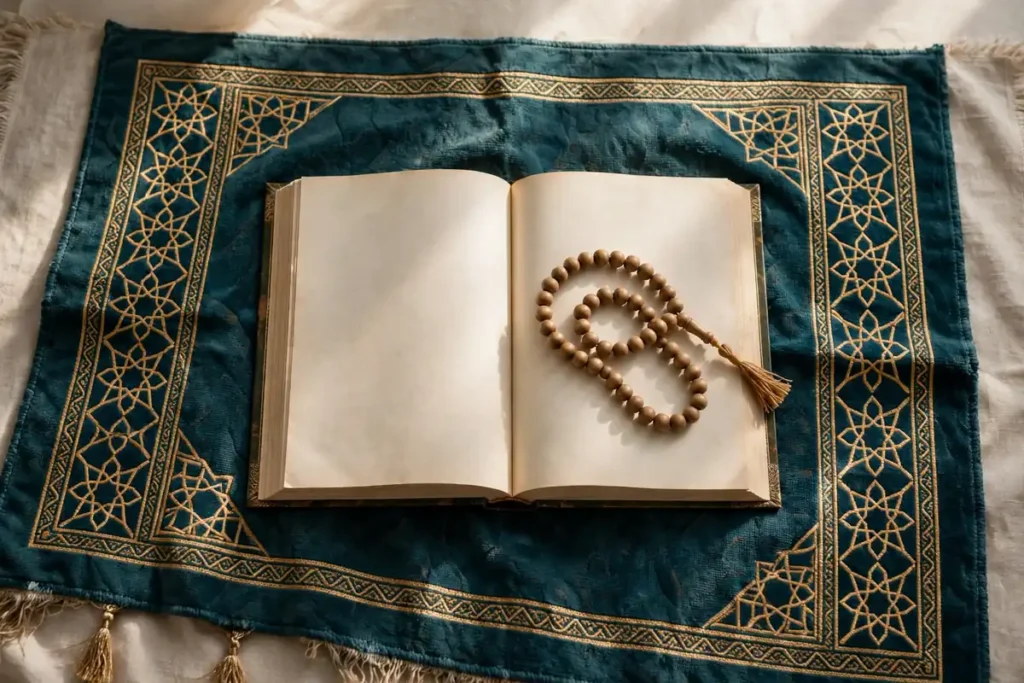
Step 1: Make wudu as you would for any prayer.
Step 2: Pray two rak’at of nafl prayer. You may recite any surahs after Al-Fatihah. Some scholars recommend Surah Al-Kafirun in the first rak’ah and Surah Al-Ikhlas in the second — this is recommended, not required.
Step 3: After the salam, recite the du’a of istikhara. While reciting it, mention your specific matter where the du’a says “this matter” — for example, “this marriage proposal” or “this job offer.”
Step 4: Go ahead with your decision. After istikhara, proceed with what seems best after your research and consultation. If the way opens with ease, take it as a good sign. If obstacles keep appearing, take that as guidance too. You may repeat istikhara over several days if you are still unsure.
The Du’a of Istikhara
Arabic:
اللَّهُمَّ إِنِّي أَسْتَخِيرُكَ بِعِلْمِكَ وَأَسْتَقْدِرُكَ بِقُدْرَتِكَ وَأَسْأَلُكَ مِنْ فَضْلِكَ الْعَظِيمِ، فَإِنَّكَ تَقْدِرُ وَلَا أَقْدِرُ، وَتَعْلَمُ وَلَا أَعْلَمُ، وَأَنْتَ عَلَّامُ الْغُيُوبِ، اللَّهُمَّ إِنْ كُنْتَ تَعْلَمُ أَنَّ هَذَا الْأَمْرَ خَيْرٌ لِي فِي دِينِي وَمَعَاشِي وَعَاقِبَةِ أَمْرِي — أَوْ قَالَ: عَاجِلِ أَمْرِي وَآجِلِهِ — فَاقْدُرْهُ لِي وَيَسِّرْهُ لِي، ثُمَّ بَارِكْ لِي فِيهِ، وَإِنْ كُنْتَ تَعْلَمُ أَنَّ هَذَا الْأَمْرَ شَرٌّ لِي فِي دِينِي وَمَعَاشِي وَعَاقِبَةِ أَمْرِي — أَوْ قَالَ: عَاجِلِ أَمْرِي وَآجِلِهِ — فَاصْرِفْهُ عَنِّي وَاصْرِفْنِي عَنْهُ، وَاقْدُرْ لِيَ الْخَيْرَ حَيْثُ كَانَ، ثُمَّ أَرْضِنِي بِهِ
Transliteration:
Allahumma inni astakhiruka bi-‘ilmika wa astaqdiruka bi-qudratika wa as’aluka min fadlika al-‘azim. Fa-innaka taqdiru wa la aqdiru wa ta’lamu wa la a’lamu wa anta ‘allam al-ghuyub. Allahumma in kunta ta’lamu anna hadha al-amra khayrun li fi dini wa ma’ashi wa ‘aqibati amri — aw qala: ‘ajili amri wa ajilihi — faqdurhu li wa yassirhu li thumma barik li fihi. Wa in kunta ta’lamu anna hadha al-amra sharrun li fi dini wa ma’ashi wa ‘aqibati amri — aw qala: ‘ajili amri wa ajilihi — fasrifhu ‘anni wasrifni ‘anhu waqdur li al-khayra haythu kana thumma ardini bihi.
Translation:
“O Allah, I seek what is best from You through Your knowledge, and I seek ability from You through Your power, and I ask You from Your great bounty. For You have power and I do not, and You know and I do not, and You are the Knower of the unseen. O Allah, if You know that this matter is good for me in my religion, my livelihood, and the outcome of my affair — or he said: in the present and future of my affair — then decree it for me, make it easy for me, and then bless it for me. And if You know that this matter is bad for me in my religion, my livelihood, and the outcome of my affair — or he said: in the present and future of my affair — then turn it away from me and turn me away from it, and decree for me what is good wherever it may be, and then make me content with it.”
Short Du’a (if you cannot memorize the long one)
If the full du’a is too long to memorize, you may use this short du’a instead — it carries the same meaning of asking Allah to choose what is best:
Arabic:
اللَّهُمَّ خِرْ لِي وَاخْتَرْ لِي
Transliteration:
Allahumma khir li wakhtar li
Translation:
“O Allah, choose what is best for me and select it for me.”
How Do You Know the Answer?

This is the part most people misunderstand.
You do not need to see a dream. Nowhere in the Qur’an or Sunnah does it say istikhara brings a dream. A dream may come, but it is not the sign you are waiting for — and a dream alone is not a reliable basis for a life decision.
Look for ease and inclination. After istikhara, go forward with the option that your heart inclines toward and that opens up easily. If doors keep closing and difficulties pile up, that is also an answer. The sign is in how matters unfold, not in a vision.
Consult trustworthy people too. The Qur’an commands the Prophet ﷺ himself: “…and consult them in the matter…” (Qur’an 3:159). Istikhara and mashwara (consultation) go together — one does not replace the other.
Then trust Allah. Once you have prayed, consulted, and decided, place your trust in Allah and move forward without constant second-guessing. Whatever the outcome, it is what Allah decreed as best.
Common Mistakes to Avoid
- Waiting for a dream and refusing to decide until one comes.
- Treating istikhara like a coin toss — a yes/no machine instead of a prayer for guidance.
- Asking someone else to do istikhara for you. Istikhara is a personal act of worship: the du’a says “this matter is good for me.” No one can pray it on your behalf. What a scholar can do is sit with you, help you think through the decision, and teach you how to do istikhara yourself — that is guidance, not a substitute.
- Praying istikhara about something haram and expecting a “green light.”
- Ignoring clear advice and evidence while waiting for a feeling.
FAQs
Do I need to see a dream after istikhara?
No. A dream is not required and not the sign. Look for ease in the matter and the inclination of your heart after prayer and consultation.
Can someone else do istikhara for me?
No. Istikhara must be prayed by the person whose decision it is. A scholar can guide you and advise you on the matter, but the prayer itself is yours.
How many times can I pray istikhara?
As many times as you need. If you are still unsure, repeat it over several days, alongside research and consultation.
Can I pray istikhara for marriage?
Yes — marriage is one of the most common reasons for istikhara. Pray it about a specific proposal, after checking the person’s character and deen.
Is there a specific time to pray istikhara?
Any time you may pray nafl prayer. Avoid the disliked times (after Fajr until sunrise, at midday when the sun is at its peak, and after Asr until sunset). The last third of the night is best for any du’a, but it is not a condition.
What if I feel nothing after istikhara?
That is normal. Proceed with the option that seems best after research and mashwara. Ease or difficulty in the matter itself is the sign — not a feeling during the prayer.
Need Personal Guidance?
Decisions about marriage, work, or family can be heavy to carry alone. If you would like to talk your situation through with a scholar — what istikhara means for your case, how to weigh your options, and what the deen says about your matter — you can book a private one-on-one guidance call with Zakariya Shafi.
To book your private one-on-one guidance session, email [email protected].