Is Sushi Halal? What to Watch For (2026)
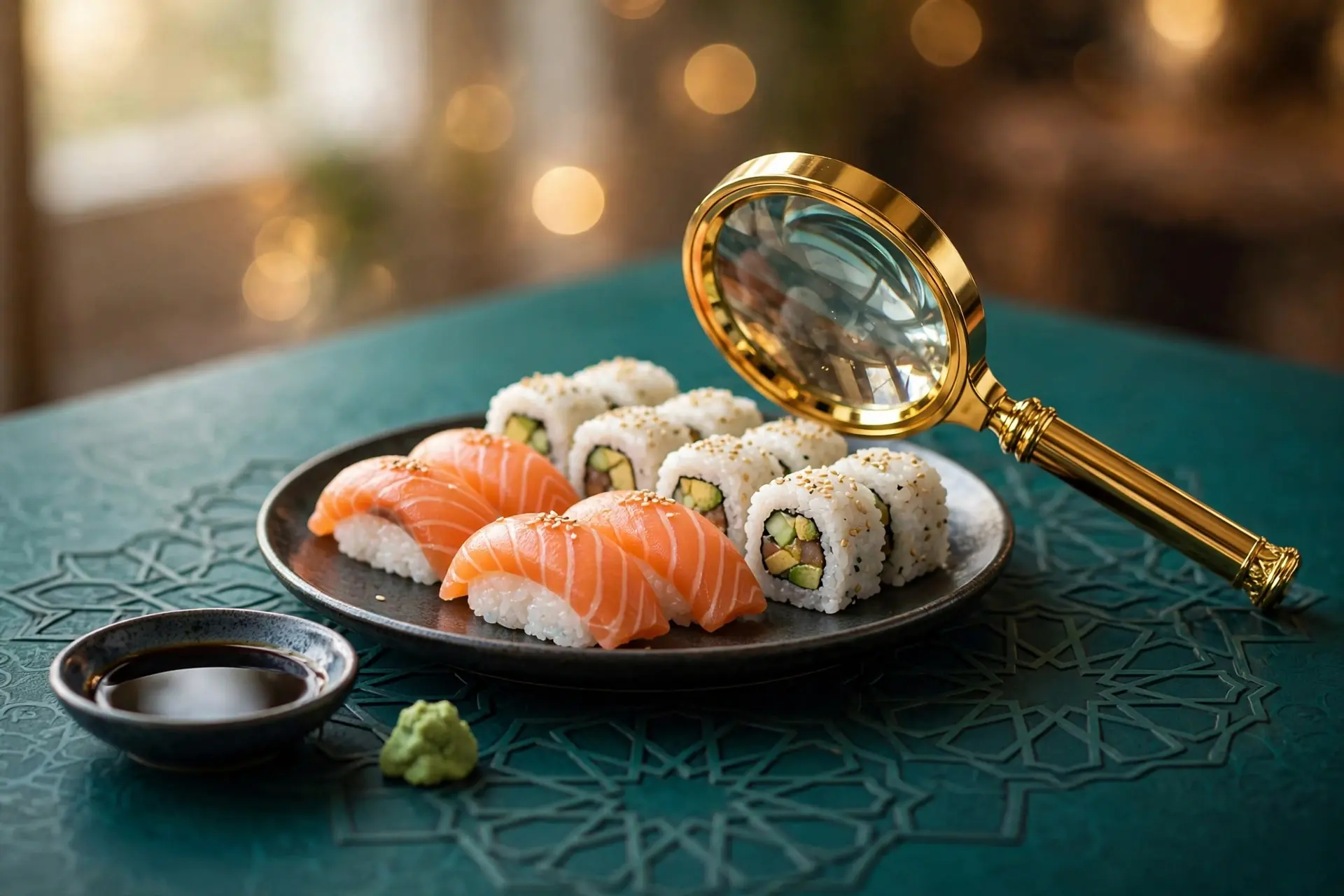
Short answer: Most sushi is halal at the starting line — seafood is permitted by consensus, no ritual slaughter needed. The real questions are three: does the sushi rice contain mirin (sweet rice wine)? Are any sauces alcohol-based? And is there cross-contamination with pork or non-halal meat? Answer those three and you know exactly where you stand.
Why Sushi Starts Halal
The Quran permits seafood in the broadest terms: “Lawful to you is game from the sea” (5:96). The Prophet ﷺ said of the sea: “Its water is pure and its dead are lawful” (Abu Dawud, Tirmidhi). Two consequences follow:
- No slaughter requirement. Unlike land animals, sea creatures don’t need dhabihah — a tuna caught by anyone, Muslim or not, is halal.
- Broad agreement. All four madhhabs agree fish is halal. Maliki, Shafi’i, and Hanbali schools permit sea creatures broadly, including shellfish.
So salmon nigiri, tuna rolls, shrimp tempura — they all begin halal. Nothing about rawness changes permissibility; raw fish is a culinary choice, not a fiqh category.
The Shellfish Question (Hanafi Readers, Read This)
One honest ikhtilaf: classical Hanafi texts restricted permissibility to fish (samak), excluding shrimp, crab, and lobster. Contemporary Hanafi scholarship has largely moved: many leading Hanafi muftis — including Mufti Muhammad Taqi Usmani — hold shrimp to be permissible, treating it as a sea creature within the Quranic permission.
Practical takeaway: if you follow the stricter classical Hanafi view, stick to finned fish (salmon, tuna, yellowtail, eel). If you follow the contemporary Hanafi position, shrimp and crab are fine. Either way, this is a recognized scholarly difference — not a reason for guilt or argument.
Issue #1: Mirin and Sake in Sushi Rice
This is the single most common halal problem in sushi — and the one most diners never ask about.
Traditional sushi rice (shari) is seasoned with rice vinegar, sugar, and salt. All halal. But many restaurants — especially in Japan and in higher-end US sushi bars — season the rice with mirin (sweet rice wine, ~14% alcohol) or a splash of sake (~15–20% alcohol) to add sheen and sweetness.
Why this matters more than people think: the seasoning is only warmed briefly to dissolve the sugar — a few minutes at most. A USDA-funded study on alcohol retention in cooking found that even 15 minutes of simmering leaves ~40% of the alcohol behind; one hour leaves ~25%. A few minutes of gentle warming leaves nearly all of it. “It cooks off” does not apply here.
What to do: Ask directly — “Does your sushi rice contain mirin or sake?” Chefs answer this routinely; it’s a normal dietary question. Many US restaurants already use mirin-style seasoning (alcohol-free) or plain vinegar seasoning. If the answer is yes, order sashimi over plain steamed rice, or choose another restaurant.
Issue #2: Sauces and Marinades
Sushi’s flavor often lives in the sauce. Check these:
- Eel sauce / unagi sauce — frequently made with sake or mirin. The most common alcohol-containing sushi sauce.
- Teriyaki glaze — traditional recipes include sake or mirin; commercial versions often don’t. Ask.
- Ponzu — sometimes contains sake; check.
- Spicy mayo — usually just mayo + chili; occasionally contains flavored liqueurs in “fusion” spots. Worth one question.
- Soy sauce — naturally brewed soy sauce contains ~1.5–2% alcohol from fermentation (not added). The majority scholarly view treats this as non-khamr: it’s not an intoxicant, not added for intoxication, and the amount is negligible (istihlak — overwhelmed by the food). Cautious diners can ask for tamari or alcohol-free soy sauce, but most scholars see no issue here.
Rule of thumb: any sauce described as “glazed,” “reduced,” or “house-made with sake” gets a question. Plain soy sauce, wasabi, and pickled ginger are fine.
Issue #3: Surimi (Imitation Crab)
Imitation crab is surimi — processed fish (usually pollock), so it starts halal. The catch: some brands add mirin, sake, or alcohol-based flavorings during processing. California rolls at US restaurants are generally fine, but if you’re buying surimi at a grocery store, read the label for mirin, sake, or wine.
Issue #4: Cross-Contamination
At a dedicated sushi bar, the risk is low — the kitchen handles fish, rice, and vegetables. At mixed restaurants (sushi + hibachi + general menu), ask about:
- Shared cutting boards or knives with pork or non-halal meat
- Shared tempura fryers (shrimp tempura in the same oil as pork katsu, for example)
- Garnishes handled after non-halal items
One polite question — “Do you prepare sushi separately from pork dishes?” — covers it. Most places are happy to answer.
The Three Questions (Use This Script)
Copy-paste ready for the restaurant:
“Hi — quick dietary question: does your sushi rice contain mirin or sake? Are your sauces alcohol-free (especially eel sauce and teriyaki)? And is sushi prepared separately from pork dishes?”
Three answers, and you’re done. Safest default orders while you learn a new spot: salmon avocado roll, tuna nigiri, or a California roll with real crab — all sidestep the usual problem ingredients.
Common Rolls at a Glance
| Roll | Usual verdict | Watch for |
|---|---|---|
| Salmon avocado roll | ✅ Safe | Nothing typical |
| Tuna nigiri / sashimi | ✅ Safe | Wasabi additives (rare) |
| California roll (real crab) | ✅ Safe | Nothing typical |
| California roll (imitation crab) | ⚠️ Usually fine | Surimi flavorings (label/ask) |
| Shrimp tempura roll | ✅ Safe (per your school) | Shared fryer at mixed restaurants |
| Spicy tuna roll | ✅ Usually safe | Spicy mayo ingredients |
| Unagi (eel) nigiri | ⚠️ Ask | Eel sauce almost always has sake/mirin |
| Dragon roll | ⚠️ Ask | Toppings + eel sauce |
| Philadelphia roll | ✅ Safe | Cream cheese is fine |
This table isn’t a fatwa — it’s a starting point for the three questions above.
Grocery-Store Sushi: Read the Label
Pre-packaged sushi is a label-reading exercise. Look for: mirin, sake, wine, “rice wine,” or vague “natural flavors” in the rice seasoning or sauces. Plain vinegar-based seasoning (su) is the norm in mass-market packs and is fine.
The Fiqh Frame: Acknowledge, Then Act
Notice the pattern across this site’s food articles (gelatin, Doritos): the fiqh is rarely “yes or no” — it’s which ingredient, which school, what to ask. The winning move is never guilt or paralysis; it’s a short checklist. For sushi, that checklist is mirin, sauces, separation.
FAQs
Is raw fish halal?
Yes. Rawness is a preparation choice, not a fiqh category. The species and the preparation (mirin, sauces, contamination) are what matter.
I’m Hanafi — can I eat shrimp sushi?
Classical Hanafi texts restricted permissibility to fish; many contemporary Hanafi muftis permit shrimp. Follow the position of the scholar you trust — both are recognized.
Is soy sauce halal?
Yes, per the majority view: its ~2% alcohol comes from natural fermentation, not added intoxicants, and it’s non-intoxicating in any realistic quantity.
Is imitation crab halal?
Usually yes — it’s fish-based surimi. Check the label for mirin, sake, or wine in the ingredients.
Does the alcohol in mirin “cook off” in sushi rice?
No. The seasoning is only warmed briefly; per USDA data, even 15 minutes of cooking retains ~40% of alcohol. Ask whether the rice contains mirin.
What about sushi at a non-Japanese restaurant?
Same three questions apply — rice seasoning, sauces, and separation. Mixed kitchens deserve the cross-contamination question in particular.
Disclaimer: Educational purposes only — not a fatwa. When in doubt, ask a qualified scholar you trust.
About the author: Zakariya Shafi — Dars-e-Nizami (Wifaq-ul-Madaris), M.Phil Islamic Studies (BZU Multan), 15 years teaching Islamic studies, 10 years dawah work.