Is Vanilla Extract Halal? The Alcohol Question (2026)
Short answer: Scholars genuinely differ. Pure vanilla extract is at least 35% ethyl alcohol by US law — so major halal certifiers (HMC, JAKIM, MUI) don’t accept it. But Hanafi scholars (Mufti Ebrahim Desai, Darul Iftaa) permit it in foods if the alcohol isn’t from grapes or dates, and Ibn Uthaymeen permitted negligible, non-intoxicating amounts in food. Drinking the extract itself is haram by all positions. Alcohol-free alternatives exist for the cautious.
Why Vanilla Extract Contains Alcohol
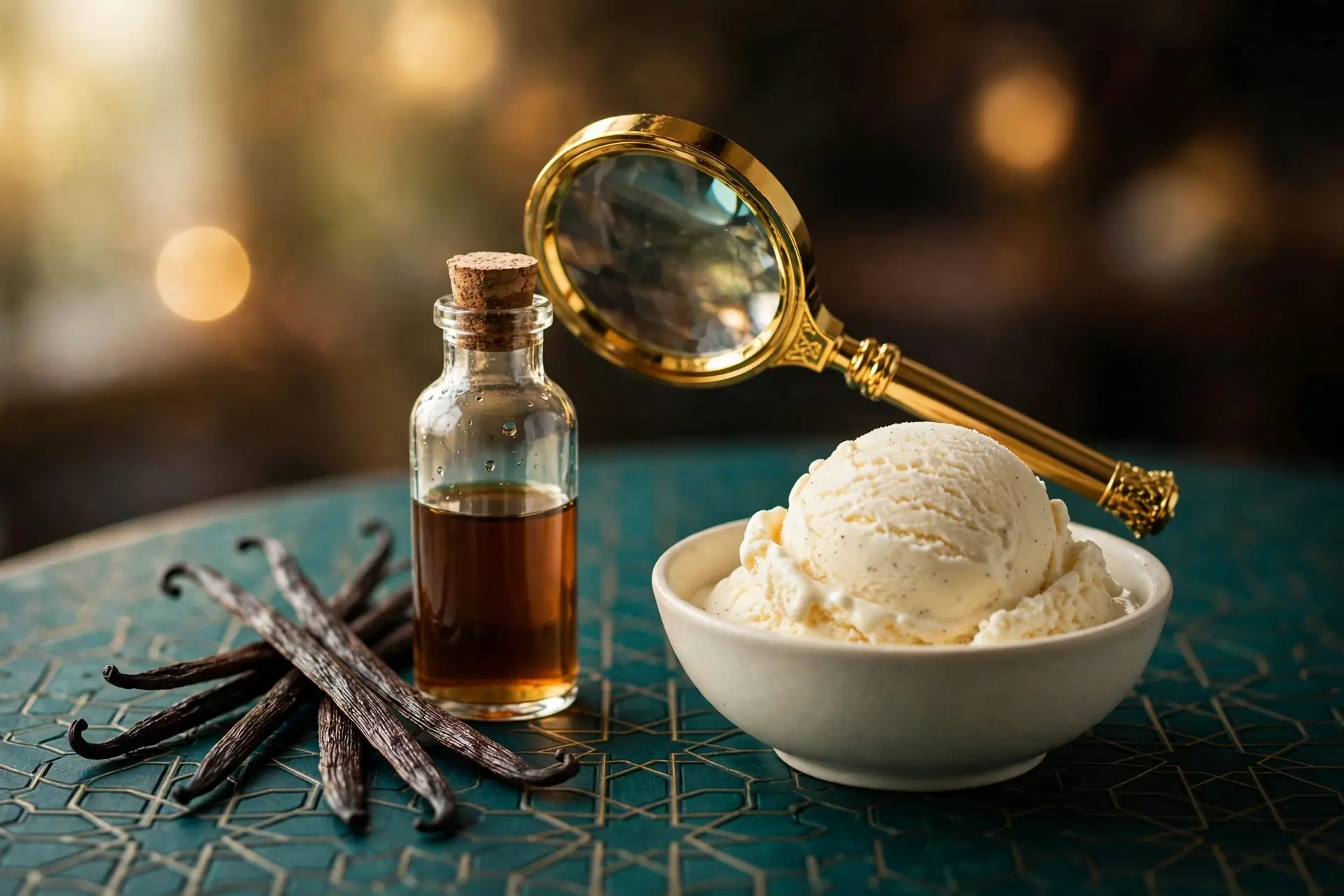
This isn’t contamination — it’s the recipe. Vanilla’s flavor compounds (chiefly vanillin) dissolve best in alcohol, and US federal law (21 CFR 169.175) requires anything labeled “pure vanilla extract” to contain at least 35% ethyl alcohol — the same strength as 70-proof liquor. One tablespoon of pure extract carries roughly a teaspoon of pure alcohol.
Imitation vanilla (vanillin in a propylene-glycol or water base) usually contains little or no alcohol — but read the label, since some imitation products also use an alcohol base.
How Much Alcohol Is Actually in Your Food?
Context matters before the fiqh. A typical cake recipe uses 1–2 teaspoons of extract for the whole cake — that’s about one-third to two-thirds of a teaspoon of alcohol total, spread across 8–12 servings. Per serving, we’re talking drops, at a dilution where nothing intoxicates anyone. This is why some scholars treat it as negligible.
But two honest caveats:
- “It all cooks off” is a myth. A USDA-funded study (Table of Nutrient Retention Factors, Release 6) measured alcohol remaining after cooking: baked or simmered 15 minutes retains ~40% of the alcohol; after one hour, ~25% remains. It takes roughly 2.5 hours of cooking to reduce it to ~5%. So a cake baked 25–30 minutes still carries a large fraction of the extract’s alcohol — just in amounts too small to intoxicate.
- The question isn’t only quantity — it’s the status of the alcohol itself. That’s the fiqh heart of the matter.
The Fiqh Heart: Is This Alcohol “Khamr”?
The majority position (Maliki, Shafi’i, Hanbali, and many Hanafis in practice) treats all intoxicating alcohols as khamr — prohibited in any amount and impure. On this view, a 35%-alcohol ingredient is a serious problem regardless of how much it’s diluted in a cake.
The Hanafi school draws a classical distinction: khamr in the strict technical sense is wine from grapes or dates — impure in its essence and haram in any quantity. Other alcohols (from grain, sugarcane, or synthetic sources) are not khamr in that technical sense, though whatever intoxicates remains haram to consume as an intoxicant. This distinction is what opens the door for the permissibility position on vanilla extract — whose alcohol is typically grain- or sugarcane-derived, not grape/date wine.
Both readings are held by serious scholars. This article presents them honestly so you can follow the scholar you trust.
The Scholarly Positions — Honestly Presented
Position 1 — Not permissible (the certifiers’ view): HMC (UK), JAKIM (Malaysia), and MUI (Indonesia) don’t certify products containing vanilla extract. Their reasoning: intentionally-added alcohol at 35% is substantial, not negligible, and the precautionary position sidesteps the khamr question entirely. If certification is your standard, vanilla extract is out.
Position 2 — Permissible in foods (the Hanafi view): Mufti Ebrahim Desai (Darul Iftaa) ruled vanilla extract used in foodstuffs is halal on condition the alcohol is not derived from grapes or dates — applying the Hanafi distinction above. The alcohol in food amounts is negligible and non-intoxicating, so the prohibition on intoxicants doesn’t attach.
Position 3 — Negligible amounts (Ibn Uthaymeen): “If the ratio is so small that it has no effect and leaves no trace, it is halal.” In baked goods and flavored foods, the amount consumed is negligible and non-intoxicating.
The practical conclusion: the certifiers’ position is the most cautious; the Hanafi/Ibn Uthaymeen positions cover ordinary home cooking for those who follow them. Pick your lane and stay in it.
Drinking Vanilla Extract Directly
Worth stating plainly: a bottle of pure vanilla extract is 35% alcohol — the strength of vodka. Drinking it to intoxicate is haram by consensus of all positions above, and it’s a genuine poisoning risk (this has caused real emergency-room visits). The entire scholarly discussion is about trace amounts in food, never about the bottle.
Vanilla Flavoring in Processed Foods
Ice cream, yogurt, protein bars, and cereals often list “vanilla extract” or “natural vanilla flavor.” For scholars who accept the negligible-amount reasoning, these are fine — the concentration in the finished product is minuscule. Those who follow strict certification standards avoid uncertified products listing vanilla extract. Both are internally consistent positions.
Medicines and Perfumes
External use (perfumes, lotions) is broadly permitted across positions — the alcohol isn’t consumed. Internal medicinal use follows the same food analysis: negligible, non-intoxicating amounts in a medicine are treated like food under the permissibility positions; strict-certification followers choose alcohol-free formulations where available.
How to Read the Label: A Practical Method
- “Pure vanilla extract” = at least 35% alcohol by law. This is the ingredient the whole debate is about.
- “Imitation vanilla” / “vanilla flavoring” = usually vanillin in propylene glycol or water — often alcohol-free. Check the ingredients: if “alcohol” or “ethyl alcohol” appears, it isn’t.
- “Natural flavors” = can legally contain alcohol as a carrier or solvent. If you’re strict, look for a halal certifier logo.
- No alcohol named and no certifier logo? For the cautious: pick a brand that states “alcohol-free” explicitly, or contact the manufacturer and ask which solvent they use.
Label-reading is a transferable skill: for a worked example of reading a real product label step by step, see our Doritos breakdown — and for another hidden-ingredient deep dive, see whether gelatin is halal.
Halal Alternatives Worth Knowing
| Alternative | Alcohol | Notes |
|---|---|---|
| Alcohol-free vanilla extract (vegetable-glycerin base) | None | Widely available in US health-food aisles and online — the simplest swap |
| Vanilla bean paste | Usually minimal | Check the label — some pastes contain alcohol |
| Vanilla powder (ground whole beans) | None | Pure and potent; pricier than extract |
| Whole vanilla beans | None | Most expensive, best flavor; split and scrape into recipes |
| Imitation vanilla (vanillin, alcohol-free base) | Usually none | Check label for “alcohol”; the cheapest option |
If you bake regularly, switching to a glycerin-based alcohol-free extract removes the question entirely — no fiqh debate needed.
FAQs
Is vanilla flavoring in ice cream halal?
For most scholars who accept the negligible-amount reasoning, yes — the amount is minuscule and non-intoxicating. Strict certifiers prefer alcohol-free flavoring. Follow the standard you trust.
Does baking burn off all the alcohol?
No. Per USDA data, baking or simmering 15 minutes leaves ~40% of the alcohol; one hour leaves ~25%. The amounts in a vanilla-flavored cake are too small to intoxicate anyone, but “it all cooks off” isn’t accurate.
What about vanilla in medicines?
Negligible, non-intoxicating amounts in medicine follow the same analysis as food under the permissibility positions. Alcohol-free formulations exist if you prefer them.
Does the Hanafi position apply to all alcohols?
No — the condition is that the alcohol not be derived from grapes or dates, and that the amount in food be negligible and non-intoxicating. Wine-derived alcohol remains prohibited.
Which vanilla is the safest choice?
An alcohol-free (glycerin-based) vanilla extract or whole vanilla beans — no alcohol at all, so the debate doesn’t apply.
What should I do about food I already ate?
What passed unknowingly is between you and Allah — the obligation is to correct course going forward based on the position you follow, not to punish yourself for the past.
Disclaimer: Educational purposes only — not a fatwa. Formulations change; verify labels.
About the author: Zakariya Shafi — Dars-e-Nizami (Wifaq-ul-Madaris), M.Phil Islamic Studies (BZU Multan), 15 years teaching Islamic studies.