Are M&M’s Halal? Mars’ Official Answer (2026)
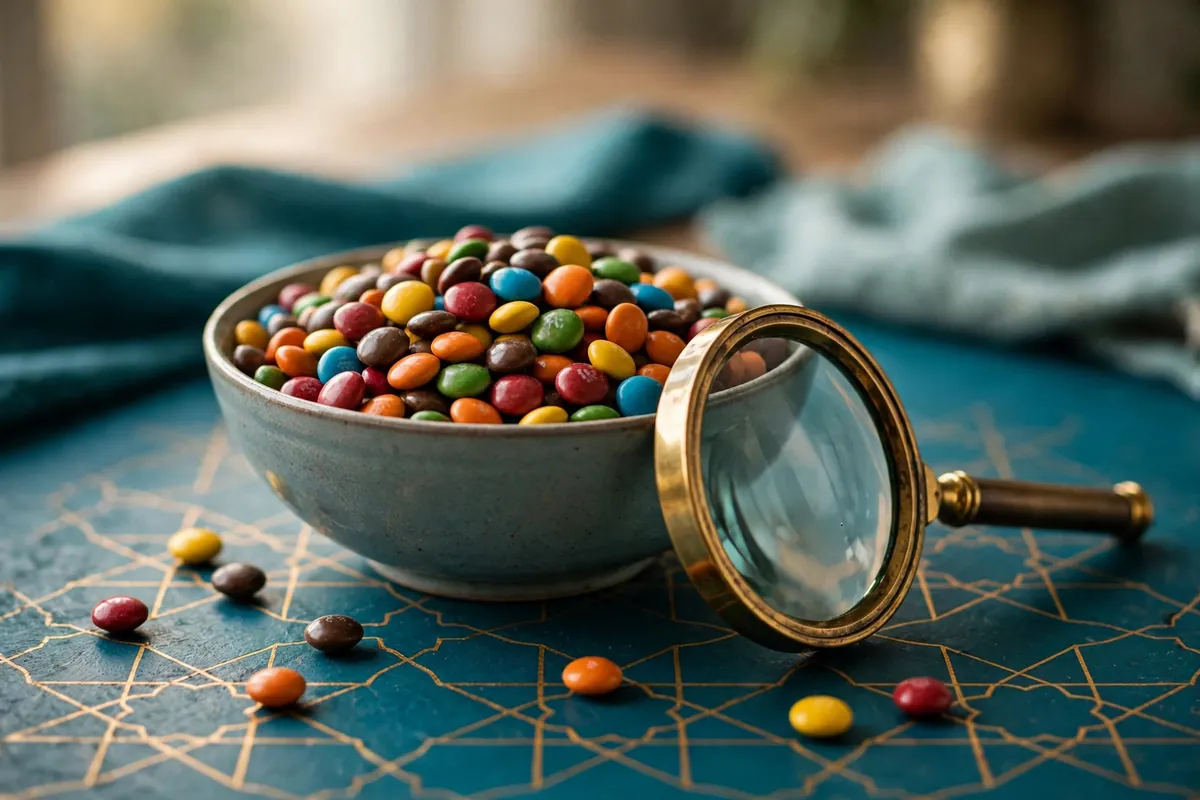
Short answer: No — M&M’s sold in the USA and UK are not halal. Mars, the manufacturer, has stated officially that M&M’s are “not suitable for a halal diet” because the company “uses additives that come from animal products.” Mars also confirms its M&M’s are not halal-certified in these markets. In some Muslim-majority countries, locally-made M&M’s are halal-certified — so the bag in your hand, not the brand’s global reputation, is what matters.
Why This Question Keeps Coming Up
M&M’s are everywhere in American life — Halloween bowls, office desks, movie theaters, kids’ lunchboxes. And every year, the same question resurfaces in Muslim group chats and parent groups: someone heard they’re haram, someone else says “it’s just chocolate, relax,” and nobody can point to a source.
The confusion has a specific origin. In February 2019, the official M&M’s UK account on Twitter answered a direct question from a Muslim consumer — and the answer was blunt: M&M’s are “not suitable for a Halal diet.” That single reply has been screenshotted and shared ever since, while Mars’ more careful corporate statements add nuance that most blog posts skip. This article separates what Mars actually said from what the internet added on top.
What Mars Actually Says: Two Statements
Statement 1 — M&M’s UK, February 2019 (on Twitter/X): “M&M’s are not suitable for a Halal diet. We use additives that come from animal products when we’re making M&M’s and traces of these can be found in sweets.”
Statement 2 — Mars corporate website: “M&M’S are not certified as Halal or Kosher. However, they do not contain any pork-based ingredients.” Mars adds that in some countries it does certify products as halal — “where we have Halal-certified products, this is indicated on the product packaging.”
Read together, the picture is precise: no pork ingredients, but animal-derived additives the company will not specify, and no halal certification in Western markets. That combination — not any single scary ingredient — is the whole story.
US Ingredients: What’s Actually on the Label
Here is the current US ingredient list for M&M’s Milk Chocolate (package data via EWG’s Food Scores database):
Milk chocolate (sugar, chocolate, skim milk, cocoa butter, lactose, milkfat, soy lecithin, salt, natural flavor), sugar, cornstarch, less than 1% of: corn syrup, dextrin, colors (Blue 1 Lake, Yellow 6, Red 40, Yellow 5, Blue 1, Yellow 6 Lake, Red 40 Lake, Yellow 5 Lake, Blue 2 Lake, Blue 2), carnauba wax, gum acacia.
Three observations that matter for the halal reader:
- No gelatin is listed in standard US milk chocolate M&M’s. If a blog tells you “M&M’s contain pork gelatin” — that is not what the label says, and Mars itself states there are no pork-based ingredients. The gelatin question still matters for candy generally (see our full gelatin breakdown), but it is not the M&M’s issue.
- The glazing agents are plant-based. The shiny shell is carnauba wax (from palm leaves) and gum acacia (from acacia trees) — not shellac, not confectioner’s glaze.
- “Natural flavor” is a black box. US labeling law lets companies hide flavor formulas behind this term, and processing aids often never appear on the label at all. Whatever animal-derived additives Mars referred to could sit here — which is exactly why the label alone cannot settle the question.
A Closer Look at the Dairy Derivatives
You’ll notice milk-derived ingredients throughout: skim milk, lactose, milkfat. Dairy in itself is halal — milk from a halal animal is pure. The question some readers raise is about processing: certain dairy ingredients (especially in cheese-making) involve animal rennet. For the milk powders and milkfat in M&M’s, Mars discloses no such processing, and the company’s own verdict remains the deciding evidence. The point is not to build a case ingredient by ingredient — it is that the manufacturer has already told us the answer, and no label detective work overrides that.
The Three Real Concerns (and Two Myths)
Concern 1: Mars’ own “not suitable” verdict. When the manufacturer tells you directly that its product isn’t suitable for a halal diet, that is the strongest possible evidence — stronger than any ingredient analysis. Companies do not say this lightly; it costs them customers.
Concern 2: Unspecified animal-derived additives. “Traces of these can be found in the sweets” — but which additives, from which animals, processed how? Without that information, permissibility cannot be verified. Unverifiable is not the same as proven haram — but it leaves no basis to declare the product halal either.
Concern 3: No certification, no audit trail. Halal certification is not just a logo — it is an independent audit of ingredients, suppliers, and production lines. M&M’s in the US and UK have none.
Myth 1: “The red ones contain carmine.” The US label lists only synthetic FD&C colors (Red 40 and others) — no carmine (E120, the insect-derived red). This claim circulates online; the current US label does not support it.
Myth 2: “The shiny coating is shellac.” The US coating is carnauba wax plus gum acacia — both plant-derived. Formulations differ by country, so always check your own market’s label.
The Fiqh Heart: Why the Manufacturer’s Word Settles It
Here is the honest scholarly frame: this is not really a debate about gelatin or whey. It is about verification.
Islamic dietary law requires knowing what you are eating. When a manufacturer (a) uses animal-derived additives, (b) will not specify them, and (c) declines halal certification, the cautious and standard scholarly position is avoidance — not because every M&M is proven haram, but because halal status cannot be established. Doubt about the source of an animal-derived ingredient is itself a reason for caution: the Prophet ﷺ advised leaving that which makes you doubt for that which does not make you doubt (Tirmidhi).
For a worked example of reading a real product label step by step, see our Doritos analysis — the same method applies to any candy on the shelf.
Region Matters: Same Brand, Different Ruling
| Region | Status |
|---|---|
| USA | Not halal-certified; Mars says not suitable |
| UK & Europe | Same official position |
| Malaysia / Indonesia / UAE | Locally-made versions can be halal-certified — check for the logo on packaging |
| Pakistan / India | Imported batches vary — check the packaging, never assume |
Same brand, different factories, different rulings. The bag in your hand is what matters.
What About Other M&M’s Varieties?
Peanut, caramel, crispy, peanut butter — Mars’ “not suitable” statement covers the M&M’s line as sold in the US and UK, not just milk chocolate. Each variety has its own label (peanut M&M’s add palm oil; peanut butter adds hydrogenated palm kernel oil), so the ingredient details shift — but the certification status does not. Check each label; the verdict logic is identical.
The 60-Second Candy Check (Use It for Any Brand)
- Is it halal-certified? A recognized halal logo on the packaging ends the discussion — certified is certified.
- What does the manufacturer say? Check the brand’s official FAQ or contact them. A “not suitable” answer, like Mars’, is decisive.
- Read the label for the big three: gelatin, carmine (E120), and alcohol-based flavorings. Absence of these is necessary but not sufficient — it doesn’t replace certification.
If a candy fails all three checks, the cautious position is to skip it. There are certified alternatives for nearly everything.
Halal Alternatives Worth Knowing
- Halal-certified chocolate in the US: look for a recognized halal certification logo on the packaging (US bodies such as IFANCA certify food products). Certified is certified — no detective work needed.
- Certified regional M&M’s: Malaysian or Indonesian-made M&M’s carrying the halal logo are the same candy, certified.
- The general rule: for any candy, apply the 60-second check above — and when the manufacturer itself says “not suitable,” believe them.
FAQs
Are M&M’s halal in the USA? No. Mars states that US M&M’s are not suitable for a halal diet because of animal-derived additives, and they carry no halal certification.
Do M&M’s contain pork or gelatin? Mars says M&M’s contain no pork-based ingredients, and the current US label for milk chocolate M&M’s lists no gelatin. The issue is unspecified animal-derived additives plus no certification — not a confirmed pork ingredient.
Are M&M’s halal in the UK? No. The “not suitable for a halal diet” statement came from M&M’s UK itself, and UK packs are not halal-certified.
Which country’s M&M’s are halal? Locally manufactured M&M’s in countries like Malaysia, Indonesia, and the UAE can be halal-certified. Look for the halal logo on the packaging — never assume based on the brand name.
Are peanut M&M’s halal? Same status as milk chocolate in the US and UK: not certified, and the manufacturer says the line is not suitable for a halal diet. The ingredient list differs, but the verdict logic is identical.
What should I do about M&M’s I already ate? What passed unknowingly is between you and Allah — the obligation is to correct course going forward, not to punish yourself for the past.
Disclaimer: Educational purposes only — not a fatwa. Formulations change; verify labels. When in doubt, consult a qualified scholar you trust.
About the author: Zakariya Shafi — Dars-e-Nizami (Wifaq-ul-Madaris), M.Phil Islamic Studies (BZU Multan), 15 years teaching Islamic studies, 10 years dawah work.